MID-QUARTER INSIGHTS - Medical Office
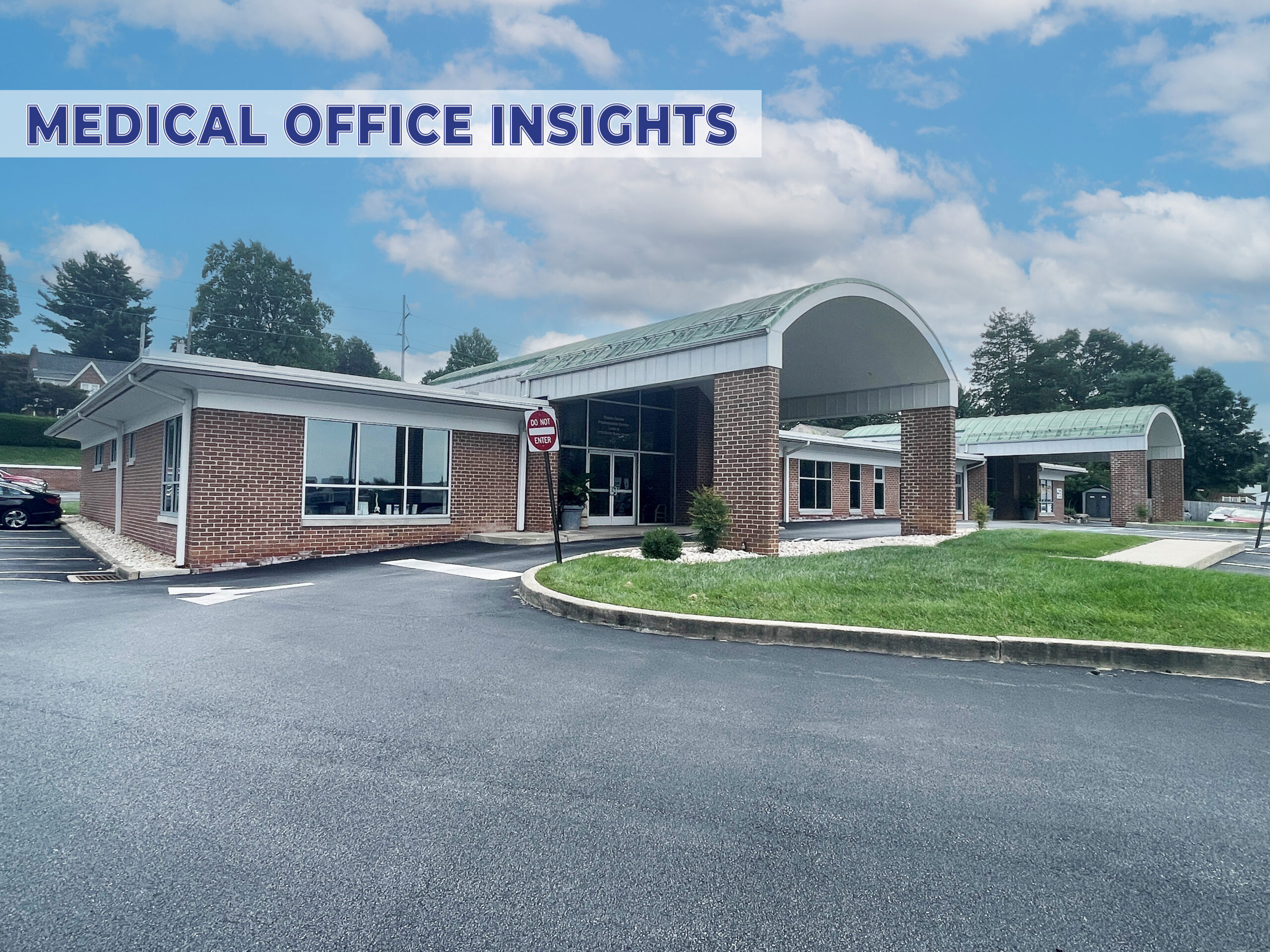
Lancaster County is one of South Central Pennsylvania’s densest, most active medical office markets, anchored by four expanding hospital systems — LG Health, UPMC, Penn State Health, and WellSpan. While WellSpan is headquartered in York County, UPMC’s recent outpatient push has accelerated competition and off-campus development. Both counties share the same emerging demand: aging populations and the need for greater primary, emergency, and specialty care access.
Premiums have been climbing since 2025, shrinking enrollment bases for independent practices. Health Resources and Services Association (HRSA) data confirms access gaps across the nation, including York and Lancaster. York City holds a geographic mental health shortage designation, while Lancaster City holds a low-income population dental shortage designation1. Recently, these economic concerns have been inspiring real estate trends across retail and office sectors.
In addition to consolidating practices and densifying specialty services, local health systems have been addressing accessibility needs through real estate strategies. Breaking from traditional medical campuses, new development models are applying retail formatting and site selection that prioritizes visibility and suburban access to accomplish smaller, clinic-intensive footprints in more locations. WellSpan’s recent construction boom brought three neighborhood hospitals to retail-concentrated corridors. And adaptive reuse conversions like Penn State Health’s Harrisburg Pike center inside a former Toys “R” Us offer cost-effective strategies that benefit from retail’s larger floor plates, higher ceilings and ample parking
Medical office vacancy in both counties is extremely tight with roughly 30K SF of vacant medical space in each county as of Q3 2026 2. Continued competitive expansion against a constrained supply indicates sustained tightening into 2027, with conversions and well-located pad sites likely to provide opportunity to both reduce retail vacancy and support medical office demand.
1 https://data.hrsa.gov/topics/health-workforce/shortage-areas/hpsa-find
2 ROCK Commercial Real Estate market data as of Q3 2026
FAQ | Owner/Landlord Representation
Does landlord representation only benefit landlords needing new tenants?
Landlord representation isn’t limited to securing new tenants. The value of commercial broker advisory for landlords begins with finding the right tenant and continues through the ongoing and rigorous processes of managing leases such as structuring renewals, managing relocation, subleasing or consolidation events, and delivering current, actionable market insights that keep your real estate portfolio well-positioned.
Are commercial brokerage advisory services limited to transaction management?
A broker advisor’s expertise extends beyond transaction management and into the more complex decisions that commercial real estate owners face. This includes guidance through site selection and development strategy, evaluating repositioning and redevelopment risk, navigating debt and refinancing considerations, and identifying when a property requires specialized lease structures, elevated tenant improvement allowances, or purpose-built construction. The depth of knowledge across asset classes and deal types are what distinguishes advisors like those at ROCK as true strategic partners.
ROCK TALK | Featuring Patten Mills, CCIM, Brokerage Advisor
Q Hybrid work has reduced demand for traditional administrative office space at the same time health systems are refocusing new development on clinical and diagnostic build-out. Is there an underused opportunity here for landlords to reposition surplus traditional office space for backend medical administrative functions — billing, records, telehealth support — that don’t require a retail visible location?
PATTEN MILLS “Consolidation of administrative staff at health campuses to optimize existing footprints is the most actionable near-term opportunity. Workforce trends continue to evolve alongside site selection strategies. As more medical clinics and outpatient centers prove to be viable, the utilization of surplus traditional office space could become a functional solution for administrative staff where capacity, economics, and network geography make consolidation within existing clinical portfolio impractical. Expanding networks of patientfacing satellite sites creates distributed clinical geography while administrative functions can be centralized in lowercost traditional office settings.”
Learn more about Patten Mills, CCIM.